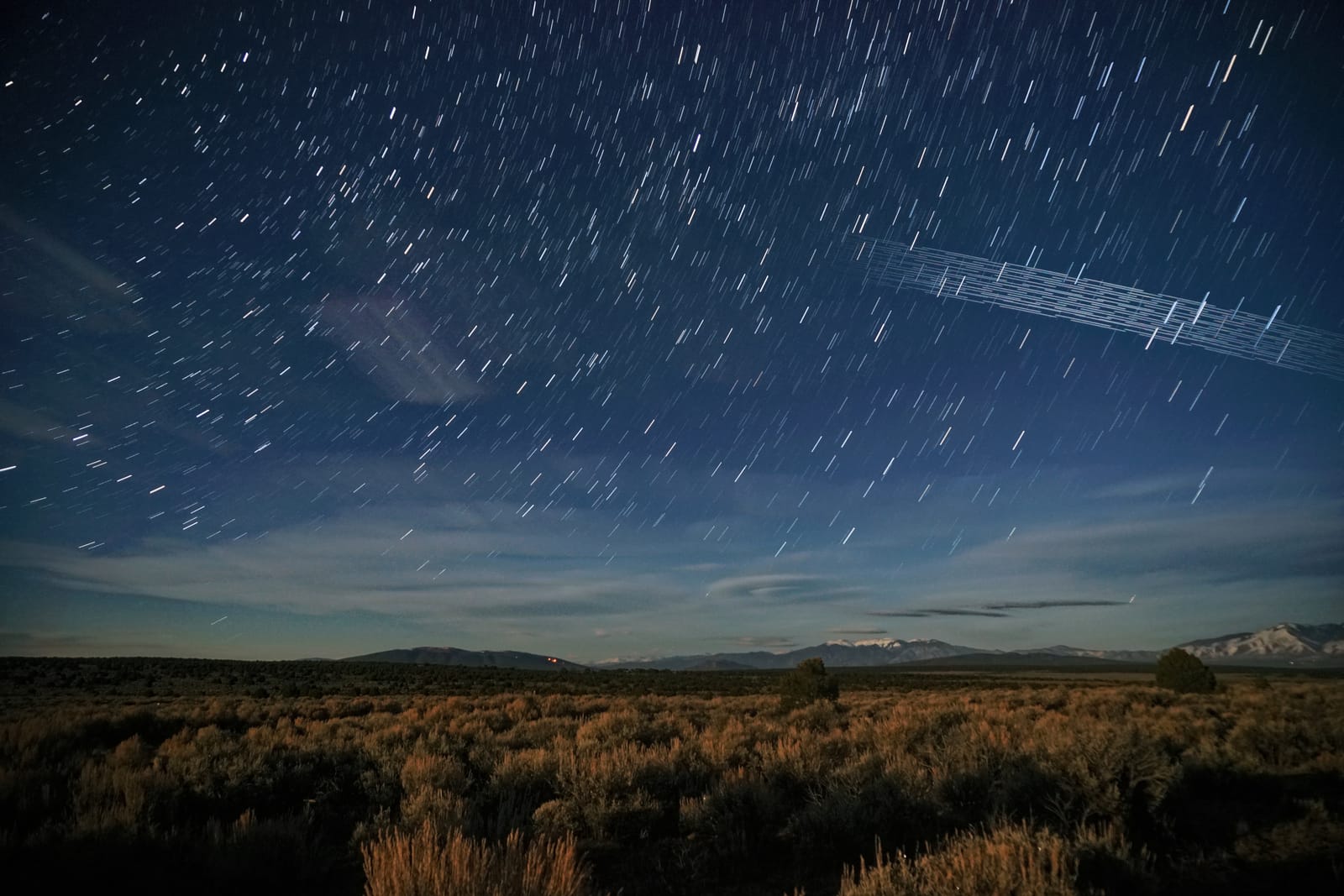
BackgroundEvent · source: cdn.geekwire.comPublished · no paid links in news
Primary source: FCC Space Bureau grant of Amazon's Gen2 and Polar systems, action date Feb 10, 2026 (copy hosted by GeekWire)
On Feb 10, 2026, the FCC’s Space Bureau approved two more Amazon satellite systems: a second-generation system of 3,212 satellites and a polar system of 1,292, plus extra Ka-band and V-band frequencies. That’s 4,504 satellites on top of the 3,232 in Amazon’s first licence, or about 7,700 in all by the FCC’s count. Half of each new system is due by Feb 10, 2032 and all of it by Feb 10, 2035.
The two new systems
| System | Satellites | Altitude and tilt of each shell | Half due | All due |
|---|---|---|---|---|
| Second generation | 3,212 | 590 km at 33°, 610 km at 42°, 630 km at 51.9° | Feb 10, 2032 | Feb 10, 2035 |
| Polar | 1,292 | 600 km at 82°, 620 km at 66°, 650 km at 80° | Feb 10, 2032 | Feb 10, 2035 |
The first-generation licence keeps its own schedule: all 3,232 by Jul 30, 2029, after a conditional FCC waiver in June 2026 covered the missed half-way date.
Why the polar shells matter
A satellite’s tilt sets how far north and south its path runs. Every Amazon Leo satellite tracked in October 2026 flew in a shell tilted 51.9° (CelesTrak data), and the FCC’s 2020 order describes Amazon’s first-generation coverage as reaching about 56° north and south. Satellites tilted 66° to 82° travel much closer to the poles, so they’re what could cover places farther north.
That puts Alaska at the center of this approval. Anchorage and Fairbanks both lie north of 56°. Our Alaska page has the details, including the share of Alaskans who live past that line.
What the approval doesn’t do
- It doesn’t put satellites in orbit. No polar-tilt satellite had launched as of Oct 25, 2026, and about 392 Leo satellites were up in all by tracker count.
- It doesn’t set a service date. Amazon hasn’t given a date for service anywhere in the US, Alaska included.
- It isn’t permission to sell antennas. Satellite approvals are separate from the equipment authorization Amazon’s US Leo site says its antennas need before they can be sold or leased.
Who this affects
For most of the lower 48, this is long-range capacity: more satellites in the 2030s, not a change to the 2026 picture. For readers in the far north, it’s the approved part of the network that could one day reach them, with its first deadline six years after the grant. Feb 10 redrew the long-range map of where Leo may fly; it left the near-term question of when Leo serves anyone where it was.
Common questions
Will the polar system bring Amazon Leo to Alaska?
How many satellites is Amazon Leo approved for in total?
When must the new satellites be in orbit?
Does this approval let Amazon sell Leo antennas in the US?
Deciding whether to wait for Amazon Leo? Take the buy-or-wait check: a few quick questions give one dated answer.
Read next
How these facts were checked
We read every source listed below on the date shown. Quotes are copied from the source text and matched to it word for word, and every Amazon Leo item carries a label for how sure it is (confirmed, announced, planned, reported, unconfirmed or not announced). This post was drafted with AI assistance from those sources, and each number, date and quote was checked against them. It is dated: if the story moves on, we add a dated update instead of quietly rewriting it. Read the editorial policy.
Where each fact comes from
- FCC Space Bureau, order DA 26-553 (footnote 8 summarizes the Feb 10, 2026 grant) · checked
- FCC Space Bureau grant of Amazon's Gen2 and Polar systems, action date Feb 10, 2026 (copy hosted by GeekWire) · checked
- FCC 2026 Section 706 report (about 7,700 satellites in total) · checked
- FCC 20-102, Kuiper order and authorization (2020), coverage to about 56 degrees · checked
- CelesTrak, Kuiper group orbital data (tracker; inclinations of Leo satellites in orbit) · checked