Published
As of Nov 3, 2026, the FCC has approved Amazon Leo’s satellite systems and has licensed its user terminals to operate in the US. A separate step hasn’t been announced: the device authorization that Amazon’s own US site says its antennas still need before they can be sold or leased.
Headlines about “FCC approval” usually describe one of the first steps. The step that matters for buying an antenna is the last one, and it’s the one with no news.
Five kinds of FCC approval, in plain words
A satellite internet service needs several different FCC decisions. They’re easy to blur together:
- System authorization. Permission to launch and run a set of satellites on given orbits and radio frequencies.
- Changes to that permission. Modifications (different orbits, fewer satellites) and waivers of specific rules.
- Deadline relief. FCC licences carry deadlines for getting satellites into orbit. Missing one has consequences unless the FCC grants relief.
- Terminal licences. Permission to operate the ground side, including the antennas customers use, on the network.
- Device authorization. The FCC’s approval of a specific device model before it can be marketed or sold, usually shown as an FCC ID on the label.
Here is where Amazon Leo (formerly Project Kuiper) stands on each, with the record behind it:
| Approval | What it allows | Date | Status | FCC record |
|---|---|---|---|---|
| First-generation system | Deploy and operate up to 3,236 satellites | Jul 30, 2020 | Granted | FCC 20-102 |
| Orbital debris plan | Clears production launches | Feb 8, 2023 | Granted | DA 23-114 |
| Trim to 3,232 satellites | Changed orbital parameters | Mar 8, 2024 | Granted | Described in DA 26-553 |
| Start before ITU finding | Begin operations before an international power-limit finding | Apr 22, 2024 | Partial waiver granted | DA 24-376 |
| Gen2 and polar systems | 4,504 more satellites, more spectrum | Feb 10, 2026 | Granted | Space Bureau grant |
| July 2026 deadline relief | Licence continues after a missed milestone | Jun 5, 2026 | Waived, with conditions | DA 26-553 |
| Terminal licences | Operate fixed and in-motion user terminals in the US | Jun 12, 2026; modified Aug 19, 2026 | Granted | Public notices SES-02872, SES-02891 |
| Device authorization (Nano, Pro, Ultra) | Market, sell or lease the antennas | None announced | Amazon’s site says still needed | leo.amazon.com footer |
The network: 2020 authorization, 2024 trim, 2026 Gen2 and polar
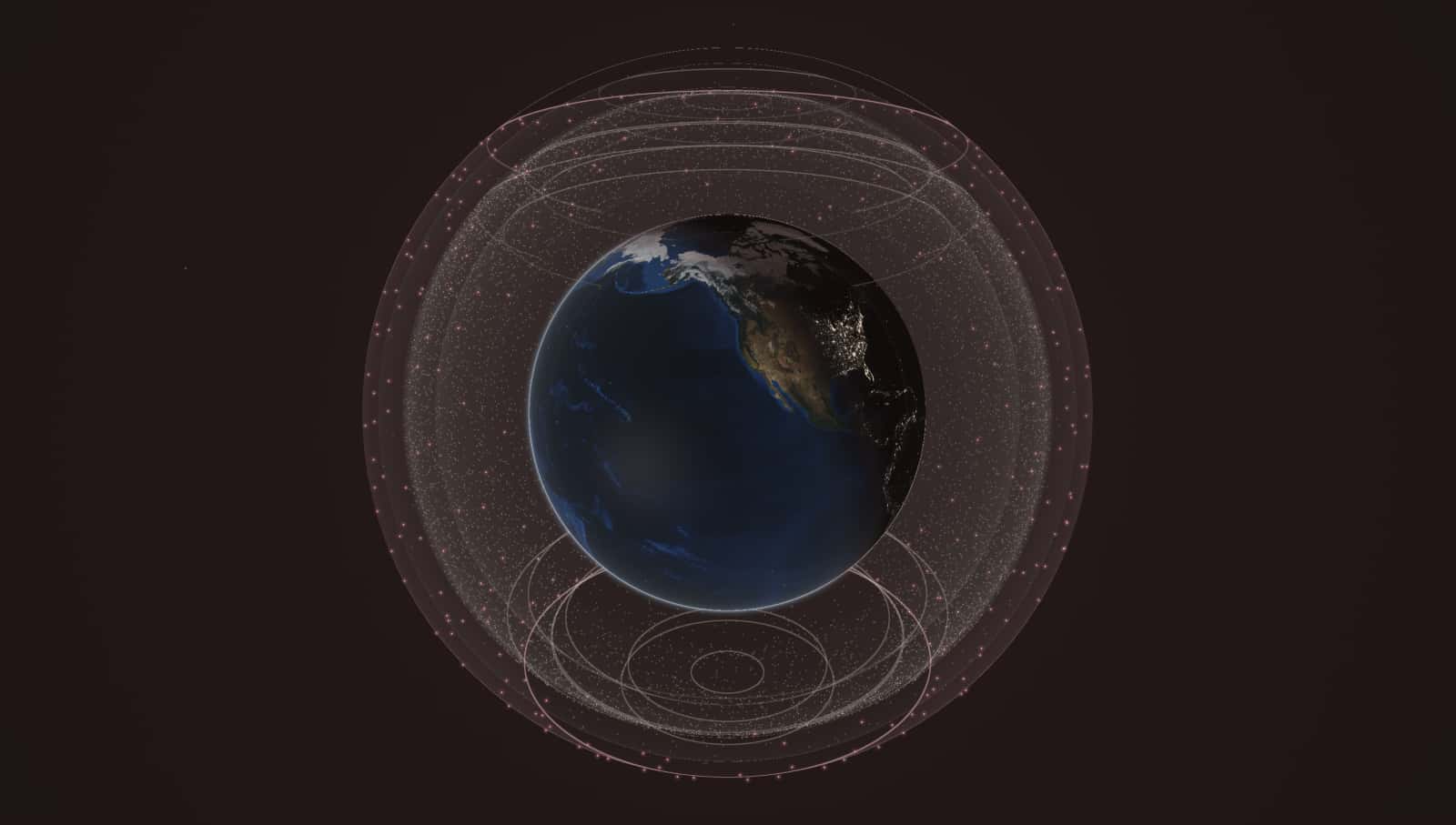
2020. The full Commission authorized Kuiper Systems, Amazon’s licence-holding company, to deploy 3,236 Ka-band satellites: 784 at 590 km, 1,296 at 610 km and 1,156 at 630 km, covering roughly 56 degrees north to 56 degrees south. Half had to be launched and operating by Jul 30, 2026, and all by Jul 30, 2029. The same order noted that “service cannot be provided to the majority of Alaska” with that design.
2023 and 2024. The FCC approved Kuiper’s debris plan on Feb 8, 2023, the last licence condition before production launches. On Mar 8, 2024 it approved changes “reducing the total number of authorized space stations from 3,236 to 3,232 satellites”, which set the half-way target at 1,616. On Apr 22, 2024 it granted a partial waiver “permitting Kuiper to begin operations prior to receiving a favorable or qualified favorable finding from the ITU”, removing a paperwork step that could have delayed service.
2026. On Feb 10, 2026 the FCC’s Space Bureau authorized a second-generation system of 3,212 satellites and a polar system of 1,292 satellites at 66 to 82 degrees, plus extra Ka- and V-band spectrum. Half of each is due by Feb 10, 2032 and all by Feb 10, 2035. The FCC’s 2026 Section 706 report says this “brings the total authorized constellation to approximately 7,700 satellites.” The polar system is what could one day reach most of Alaska, but none of it has launched. Our Alaska page covers that in detail.
The deadline relief of June 2026
On Jan 30, 2026, with about 180 satellites in orbit, Amazon asked the FCC to move its 1,616-satellite deadline from Jul 30, 2026 to Jul 30, 2028, or to waive it. Amazon projected about 700 satellites by July, citing late rockets.
On Jun 5, 2026 the Space Bureau answered in order DA 26-553: “we grant, with conditions, the request of Kuiper Systems LLC”. It didn’t move the date. Instead it waived the rule that would have capped the licence at whatever was in orbit on Jul 30, 2026. In exchange:
- Satellites launched after Jul 30, 2026 lose interference priority until Mar 30, 2028, or earlier once half the constellation is up (Oct 30, 2027 with a certification).
- “This grant does not affect Amazon Leo’s existing obligation to deploy 100% of its constellation by July 30, 2029”.
The same order observed: “At this time, only one operator, SpaceX, is providing broadband to American consumers from low-Earth orbit.” When the July date came, Amazon had “nearly 400” satellites up, by its own description, against the 1,616 required. The licence continued. Our tracker logs each FCC milestone with its date.
The terminal licences of June and August 2026
This is the approval most often mistaken for a green light.
On Jun 12, 2026 the FCC’s Space Bureau granted Kuiper Systems two blanket earth-station licences covering the US and its possessions: E260062 for fixed user terminals and E260060 for earth stations in motion. They appeared in public notice SES-02872 on Jun 17. On Aug 19, 2026 the FCC granted modifications that list three Kuiper terminal antenna types, 0.158 m, 0.185 m and 0.366 m, for fixed use and add an in-motion blanket covering US territorial waters (public notice SES-02891, Aug 26).
What these licences do: they let Amazon operate customer terminals on its network in the US, at home and on the move.
What they don’t do: they don’t name Leo Nano, Pro or Ultra, so don’t match the antenna sizes to products. They don’t start service. And they aren’t the device authorization Amazon’s site says it still needs for selling or leasing antennas.
The step Amazon’s own site says is missing: device authorization
Every US page on leo.amazon.com carries the same footer. Read on Nov 3, 2026, it says: “These devices have not been authorized as required by the rules of the Federal Communications Commission. These devices are not, and may not be, offered for sale or lease, or sold or leased, until authorization is obtained.”
That’s Amazon describing its own status, and it explains a lot. There’s no price, no order page and no reservation, because Amazon says it can’t offer the antennas for sale or lease yet. Its enterprise preview shipped Leo Pro and Leo Ultra units to select companies; for households, that footer is the latest word Amazon has published.
One related FCC action is easy to confuse with this. On Apr 22, 2026, FCC public notice DA 26-390 announced a conditional approval, ending Oct 31, 2027, that exempts several eero routers and “Amazon Leo routers” from the FCC’s Covered List. It shows that a Leo-branded router exists. It isn’t an authorization for the antennas, and Amazon hasn’t published that router’s specs or price.
How to check for it yourself
You don’t need to wait for a headline. Three places would show the change:
- Amazon’s footer. If the “not authorized” sentence on leo.amazon.com disappears or changes, Amazon has said something new about its devices.
- The FCC’s equipment authorization database. It’s public and searchable on fcc.gov by the company that applied. A grant for a Leo antenna would appear there. Amazon hasn’t said which company name or code it would file under, so look for new grants that mention Leo or Kuiper hardware.
- Amazon’s own news. A device authorization would likely come with, or shortly before, a US price page and an order button.
Even then, an authorized device isn’t the same as service at your address. Amazon says initial service begins in “certain locations later this year”, with no US location named. Our availability page records each change as it happens.
Common questions
Has the FCC approved Amazon Leo?
Does Amazon Leo have an FCC ID?
Do the June 2026 terminal licences mean Leo is for sale?
Read next
How these facts were checked
Every claim in this post comes from the sources listed below, each read on the date shown, and Amazon Leo items say how sure they are (announced, reported, not announced). This post was drafted with AI assistance from those sources; the site owner checked each number, date and quote against them before it went up. Read the editorial policy.
Where each fact comes from
- FCC 20-102: Kuiper Systems authorization (Jul 30, 2020) · checked
- FCC DA 23-114: Kuiper orbital debris plan · checked
- FCC DA 24-376: partial waiver to begin operations before an ITU finding · checked
- FCC DA 26-553: milestone waiver (Jun 5, 2026) · checked
- FCC grant of the Gen2 and polar systems (Feb 10, 2026; copy hosted by GeekWire) · checked
- FCC 26-55: 2026 Section 706 report · checked
- FCC public notice SES-02872 (earth station licences, Jun 2026) · checked
- FCC public notice SES-02891 (modifications, Aug 2026) · checked
- FCC DA 26-390: conditional approval for eero and Amazon Leo routers · checked
- Amazon Leo US site (footer on device authorization) · checked